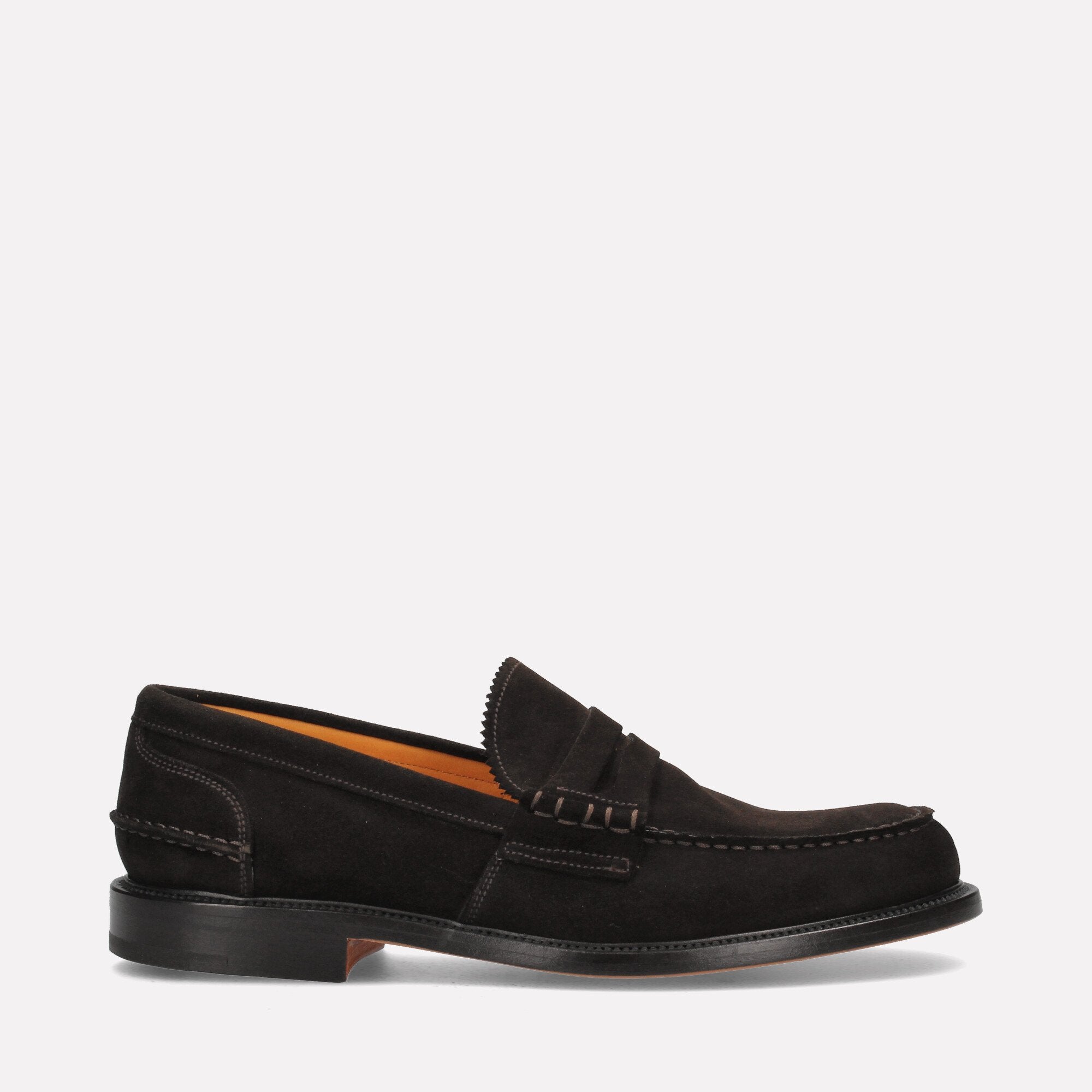

How to Choose Men's Shoe Size: Measurements, Charts and Fitting Guide

Choosing the right shoe size is more complicated than it seems — and getting it wrong is costly. A tight pair causes foot problems. A loose pair slips and deforms. And with handcrafted leather shoes, where the leather needs a break-in period, starting from the wrong size is a hard mistake to fix later.
In this guide you'll find how to measure your foot correctly, how to read European, British and American sizes, and the specific guidance for Mille885 shoes.
How to measure your foot: the correct method
Measure your foot while standing, with your weight distributed across both feet. The foot widens slightly under body weight — a seated measurement gives a less accurate result.
Paper-and-pencil method
- Place a sheet of white paper on the floor
- Stand on it with your heel against a wall or a fixed reference
- With a pencil, trace the outline of your foot keeping the pencil vertical (not tilted)
- Measure the maximum distance from the heel to the tip of the longest toe
- Repeat for both feet — your right and left foot can differ by up to half a size
Always use the larger foot as the reference for choosing your size.
When to measure
The best time is afternoon or evening: the foot swells slightly during the day from standing and walking. A morning measurement can underestimate the size by half a number.
Men's shoe size chart: EU, UK, US
| Foot length (cm) | EU | UK | US |
|---|---|---|---|
| 24.0 cm | 37.5 | 4.5 | 5.5 |
| 24.5 cm | 38 | 5 | 6 |
| 25.0 cm | 38.5 | 5 | 6 |
| 25.5 cm | 39 | 5.5 | 6.5 |
| 26.0 cm | 40 | 6 | 7 |
| 26.5 cm | 40.5 | 6.5 | 7.5 |
| 27.0 cm | 42 | 7.5 | 8.5 |
| 27.5 cm | 43 | 8.5 | 9.5 |
| 28.0 cm | 44 | 9 | 10 |
| 28.5 cm | 45 | 10 | 11 |
| 29.0 cm | 46 | 11 | 12 |
| 29.5 cm | 46.5 | 11.5 | 12.5 |
| 30.0 cm | 47 | 12 | 13 |
Quick UK → EU conversion (men's): UK 6 = EU 40 · UK 6.5 = EU 40.5 · UK 7 = EU 41 · UK 7.5 = EU 42 · UK 8 = EU 42.5 · UK 8.5 = EU 43 · UK 9 = EU 43.5 · UK 9.5 = EU 44 · UK 10 = EU 44.5.
Note: EU sizes aren't universally standardised — a size 42 from an Italian shoemaker may correspond to a 42.5 from a French or German brand. Always rely on the length in centimetres as the absolute reference measurement.
Tight or loose: the width of the foot
Length is only half the measurement. The width of the foot determines whether a shoe fits well or pinches at the sides — and many comfort problems originate here, not from length.
The standard width of European shoes is designed for a "normal" foot (medium width E for men). Those with a wide foot (width EE or EEE) should look for shoes with wider lasts or add half a size to compensate.
Signs the shoe is too narrow in width:
- Lateral pressure on the little toes right after putting the shoe on
- The upper forms marked horizontal creases in the metatarsal area
- Tingling or numbness in the toes after 30–60 minutes of wear
Leather shoes and break-in: what to expect
Full-grain leather shoes — like those Blake-constructed with Italian leathers — need a break-in period. The leather is stiff at first and softens progressively with use and the warmth of the foot.
This means a new handcrafted shoe can feel slightly tight on the first few outings — especially around the heel and the metatarsal. That's normal. After 3–5 wears of 2–3 hours, the leather adapts to the shape of the foot and comfort improves noticeably.
How to manage the break-in:
- Wear the new shoes for short periods (2–3 hours) on the first outings
- Use thin socks to reduce friction during break-in
- Apply a nourishing cream to the leather before the first outings to soften it slightly
- If there are specific pressure points (heel, big toe), a cobbler can locally stretch the shoe with dedicated tools
Caution: the break-in softens the leather — it doesn't enlarge the size. If the shoe is objectively too short, breaking it in won't solve the problem.
Mille885 sizing: specific guidance
Mille885 shoes follow standard European sizing (EU 40–46). The last is designed for a medium-normal foot with slightly more room in the toe than narrow-toe shoes.
Note: Mille885 shoes run large. Based on our return data, most customers who send a pair back do so because the shoe is too big — not too small. If you're between two sizes, choose the smaller one, unlike the usual advice for leather shoes.
Sizing guidance:
- If you're exactly between two EU sizes, choose the smaller number: the last runs larger than average
- If you have narrow or average feet, don't size up "to be safe" — it's the most common cause of returns
- If you have a wide foot, your exact size is usually already enough — don't round up
- For loafers (College, Glasgow): the slip-on shape makes the roomy fit even more noticeable — your exact size or half a size down is often the right call
- For derbies and laced shoes (Boston): the structured fit compensates somewhat, but it still runs larger than average — never size up
If in doubt, write to Mille885 before purchasing: the team can help you choose the right size based on your foot measurements.
Frequently asked questions about men's shoe size
How do I know if a shoe fits well?
A shoe fits well when: there's about 1 cm of space between the tip of the longest toe and the tip of the shoe, the width doesn't compress laterally, and the heel doesn't slip when walking. The shoe should feel snug but not tight.
Do Italian sizes match European ones?
Yes — Italian shoes use European sizing (EU). An Italian 42 is a EU 42. Differences between brands relate to the shape of the last, not the numbering.
Can I stretch a leather shoe that pinches?
An experienced cobbler can locally stretch a full-grain leather shoe — especially at lateral pressure points or the heel. It isn't a universal solution, but it works well for small corrections (max half a size in width).
Does a suede loafer stretch with wear?
Suede tends to soften and adapt to the foot slightly faster than smooth leather. A suede loafer in the right size becomes very comfortable after 3–5 wears. It doesn't lengthen significantly.
What's the difference between UK and EU sizing?
UK sizes are typically 1–1.5 numbers lower than EU. A EU 42 corresponds to roughly a UK 7.5–8. US sizes are 0.5–1 number higher than UK. To avoid mistakes, always use foot length in centimetres as the reference.
What size is a 26 cm foot?
A 26 cm foot length corresponds to EU 40, UK 6, US 7.
What shoe size is a 27 cm foot?
27 cm corresponds to EU 42, UK 7.5, US 8.5. If you're between two measurements, always round up.
What is US 8.5 in EU sizing?
A US 8.5 corresponds to roughly EU 41.5-42 and UK 7.5-8, depending on the brand. Always use foot length in centimetres for the most reliable conversion.
What is UK 7 in Italian/EU sizing?
A UK 7 corresponds to an Italian/EU 41.
Read more
- Italian handcrafted shoes: how to recognise them and why they last longer — what sets a quality leather shoe apart.
- Blake construction: what it is and why it makes better shoes — why construction also influences the fit of the shoe.
- College Loafer for Men: the complete guide — the most loved Mille885 model, with specific fit guidance.