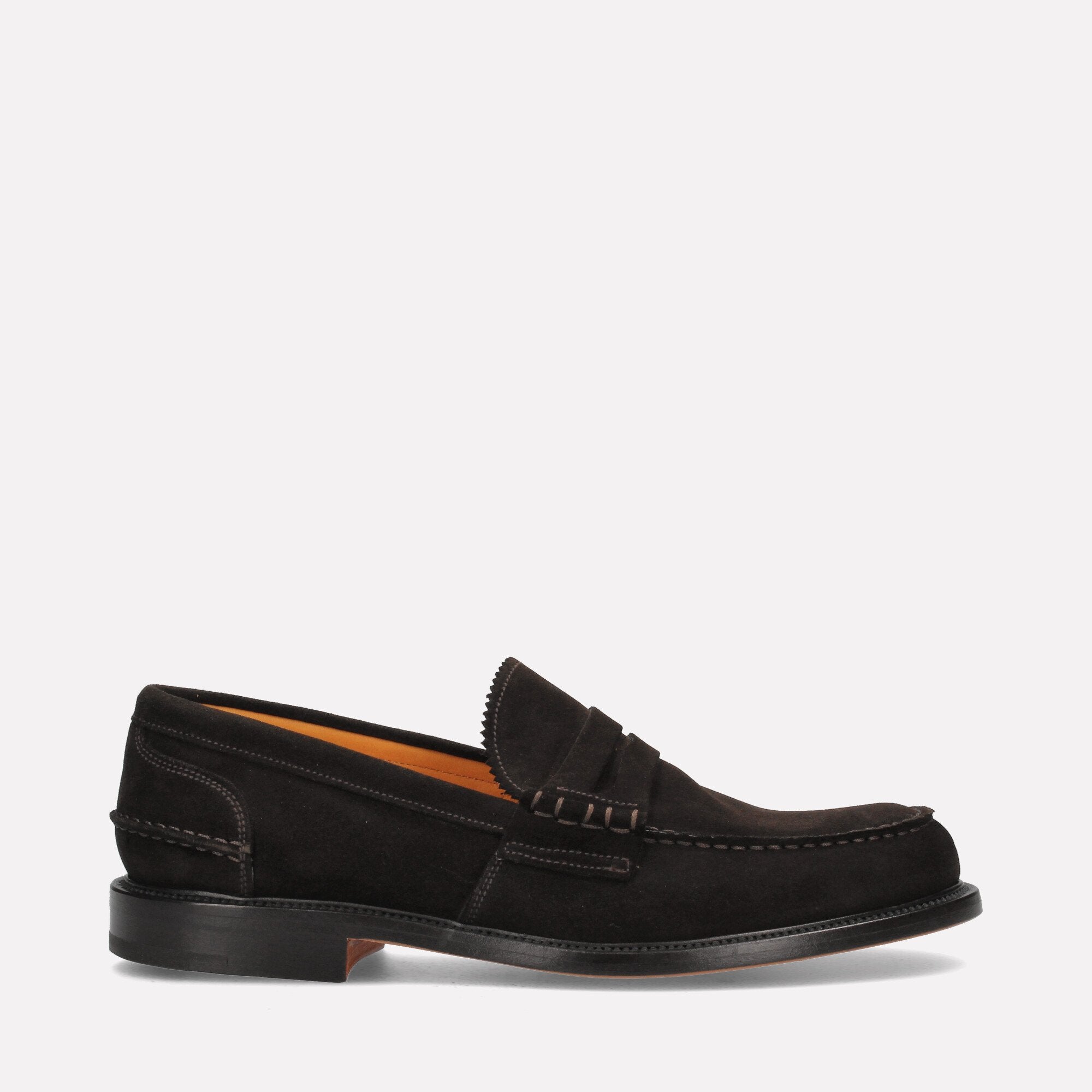

Italian Handcrafted Shoes: How to Recognise Them and Why They Last Longer

The word "handcrafted" is one of the most abused in the footwear sector. You find it on low-cost industrial products, on shoes assembled in series with synthetic materials, on labels that say nothing precise. And yet the difference between a real handcrafted shoe and one that merely looks the part is concrete — and it shows, it's felt, and it's measured over time.
This guide gives you the tools to recognise an authentic Italian handcrafted shoe: what to look at, what to touch, what to ask.
What "handcrafted" means in footwear
A handcrafted shoe isn't necessarily made entirely by hand — this is the first misconception to clear up. Artisan workshops use machines too: the Blake machine to stitch the sole, the trimming tool to work the heel, the press for precise shaping. The difference isn't between "all by hand" and "all by machine".
The real difference lies in the presence of the artisan as a control point at every stage: the person cutting the leather assesses the imperfections of the individual hide. The person lasting the upper adjusts the tension by hand. The person finishing the shoe works on every pair. In an industrial process none of these moments exist — there's only the machine and the speed.
The signs that distinguish an Italian handcrafted shoe
1. The leather: full-grain vs corrected
Quality artisan leather is full grain: the outer side of the hide is intact, neither sanded nor corrected with layers of polyurethane. You can see it from the natural, slightly irregular texture of the surface — not perfectly uniform like that of industrial shoes. Over time, full-grain leather develops a unique patina that improves its appearance. "Corrected" leathers (split or bonded leather) never do this: they stay flat and then flake.
How to recognise it: look at the leather against the light. Full-grain leather has visible pores and a natural texture. Touch it: it should feel alive, not plasticised.
2. The construction: Blake, Goodyear or Norwegian welt
A quality handcrafted shoe is built with a technique that involves stitching the upper to the sole — not gluing it. The main techniques are Blake construction and the Goodyear welt.
Blake construction — born and perfected in the Fermano district — stitches the upper and sole with a single through-stitch. It produces a shoe that's more flexible, lighter, with a slimmer profile. Read more about Blake construction →
How to recognise it: look at the insole — if you see a stitch running along the inner perimeter, it's Blake construction. If the sole is simply glued, it isn't handcrafted in the technical sense of the term.
3. Resoleability
A shoe built with Blake or Goodyear welt is resoleable by an experienced cobbler. This is one of the most direct tests of build quality: if the maker can't guarantee resoling, the shoe isn't handcrafted in the proper sense. A quality Italian handcrafted shoe lasts 10, 15, 20 years — because when the sole wears out, you replace the sole, not the shoe.
4. The stitching: regular but not perfect
The stitching of a handcrafted shoe is regular and taut, but carries the signs of a human hand — not the robotic perfection of an industrial machine. Look at the lateral stitching of the strap on a loafer, or the join between upper and sole: if they're too perfect, they probably aren't done by hand.
5. The lining and the interior
In a quality handcrafted shoe, the inner lining is leather — not synthetic fabric or plastic materials. The inner leather absorbs moisture, adapts to the shape of the foot over time and doesn't come unglued. Touch the inside of the shoe: it should be soft, warm, natural.
6. The weight and flexibility
A Blake shoe is light and flexible. Try bending it slightly with your hands: it should flex naturally, following the foot's flex point. A shoe with a glued synthetic sole tends to be more rigid and heavy, or conversely too soft and unstable.
The Fermano district: where Italian handcrafted footwear is born
Italy doesn't have just one footwear district — but the Fermano, in the Marche, is one of the oldest and most specialised. Towns like Montegranaro, Montegiorgio and Sant'Elpidio a Mare have for generations concentrated a complete supply chain: tanneries, sole suppliers, artisans specialised in every stage of the work.
It's in this context that Blake construction developed and was perfected. It isn't just about technique: it's an ecosystem of knowledge passed from father to son, from master to apprentice, that doesn't exist anywhere else in the world in the same form. The story of the Fermano district →
Italian handcrafted vs "Made in Italy": not the same thing
The "Made in Italy" mark requires that at least 51% of the value of the work takes place in Italy — but it specifies neither the quality of the materials nor the construction technique. It's possible to have a "Made in Italy" product assembled industrially with low-quality leathers.
An authentic handcrafted shoe goes beyond the label: it's identifiable by the techniques, the materials and the traceability of the production. Serious artisan brands can tell you where each single shoe was made, by whom and with which materials.
Mille885: Fermano craftsmanship, sold directly
Mille885 was born from the Mazza family, who have produced footwear in the Fermano district since 1885. Every pair is built with the Blake technique on Italian calfskin, by the same hands that have been producing for generations. The DTC — direct-to-consumer — project was created to eliminate distribution markups and bring the handcrafted shoe to an accessible price, without compromise on construction.
Discover the Mille885 collection →
Frequently asked questions about Italian handcrafted shoes
How do you recognise a handcrafted shoe?
The main signs are: full-grain leather (natural texture, not plasticised), construction with visible stitching (Blake or Goodyear welt), a leather inner lining, resoleability guaranteed by the maker, regular stitching with signs of manual work.
How much do Italian handcrafted shoes cost?
A handcrafted shoe built in Italy with Italian leathers starts at around €150–200 for the entry level. The €200–400 range covers medium-to-high quality artisan production. Above €400 you enter the luxury segment with more elaborate work. Mille885 sits in the €200–350 range with Blake construction and selected Italian leathers.
Do handcrafted shoes really last longer?
Yes, structurally. Stitched construction (Blake or Goodyear) allows resoling, which effectively eliminates sole degradation. With proper maintenance, a full-grain leather handcrafted shoe can last 15–20 years. A glued industrial shoe rarely exceeds 2–3 years of regular use.
What are "corrected" leathers and why are they worse?
Corrected-grain leathers are leathers that have undergone abrasive processing to remove natural imperfections, then coated with a layer of polyurethane to even out the appearance. The result is a more regular surface but one stripped of the characteristics of natural leather: it doesn't breathe, doesn't develop a patina, and cracks over time. Full-grain leathers have visible imperfections but they're alive — they improve with use.
Read more
- Blake construction: what it is and why it makes better shoes — the artisan technique that distinguishes a real shoe.
- Handcrafted shoes in the Marche: the Fermano district — the territory where the Italian footwear tradition is born.