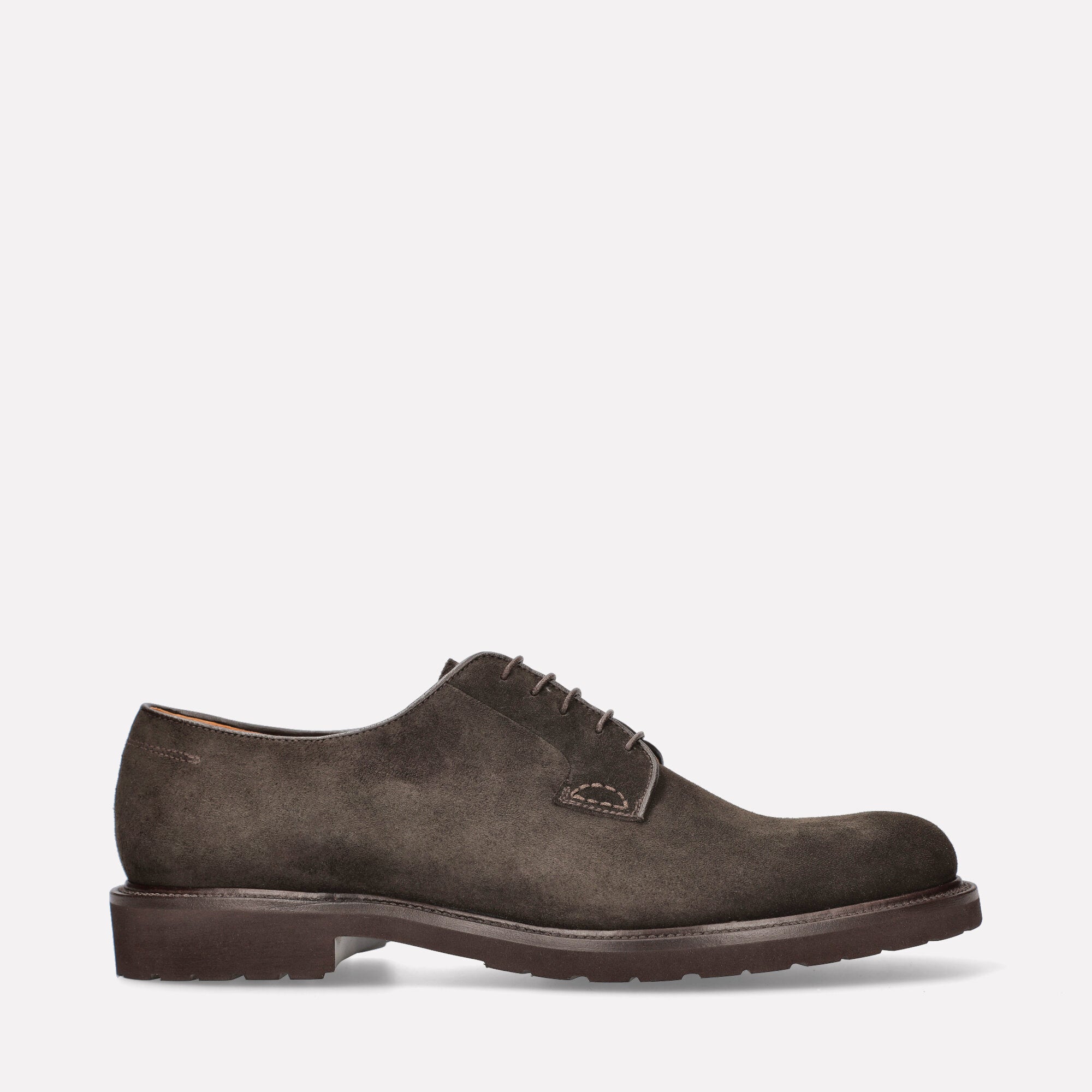

Derby and Oxford Shoes for Men: Differences, Pairings and How to Choose

Derby and Oxford are the two most important laced shoes in the formal men's wardrobe. Often confused, they have precise construction features and different usage registers. In this guide you'll understand the differences, how to pair them and what to look for when choosing a quality pair.
Difference between Derby and Oxford: what really changes
The distinction between derby and oxford is constructional, not aesthetic: it concerns the way the quarters are stitched to the vamp.
Oxford (or Balmoral)
In the oxford, the quarters are stitched under the vamp (closed lacing). This means that when you lace the shoe, the side edges of the throat close completely. The result is a cleaner, more formal line that hugs the ankle more closely. It's the most elegant shoe in the category — the classic choice for ceremonies, suits and very formal environments.
Derby (or Blucher)
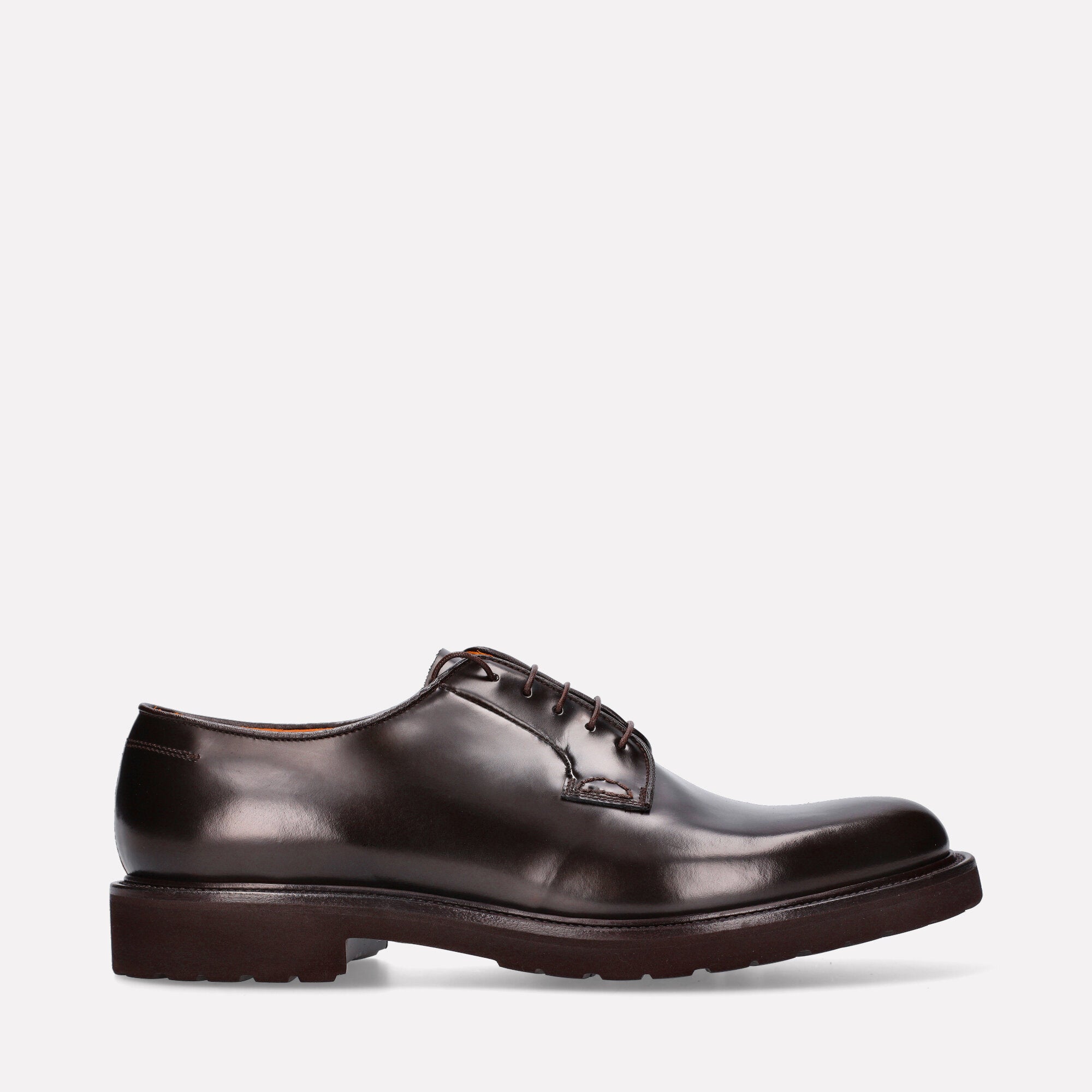
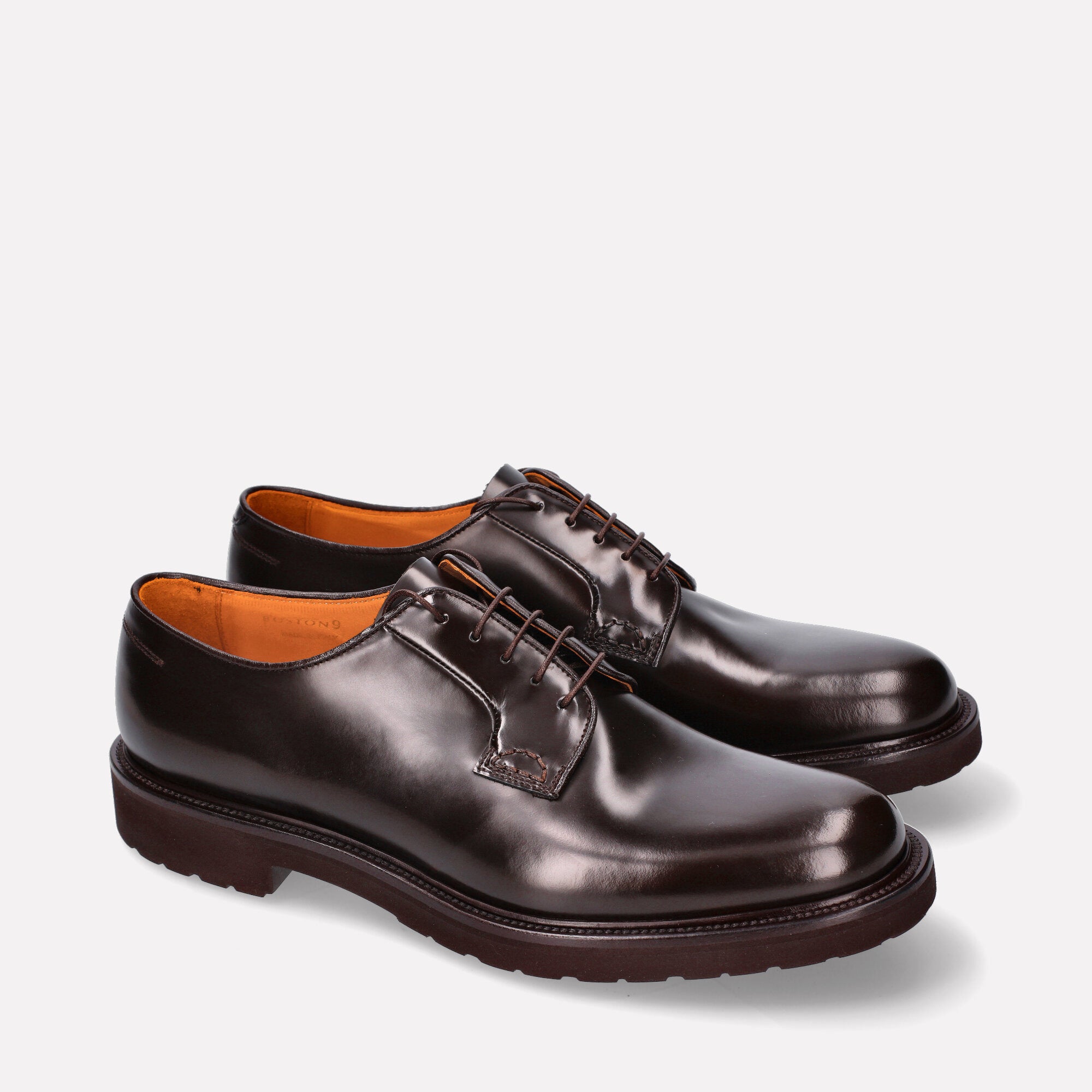
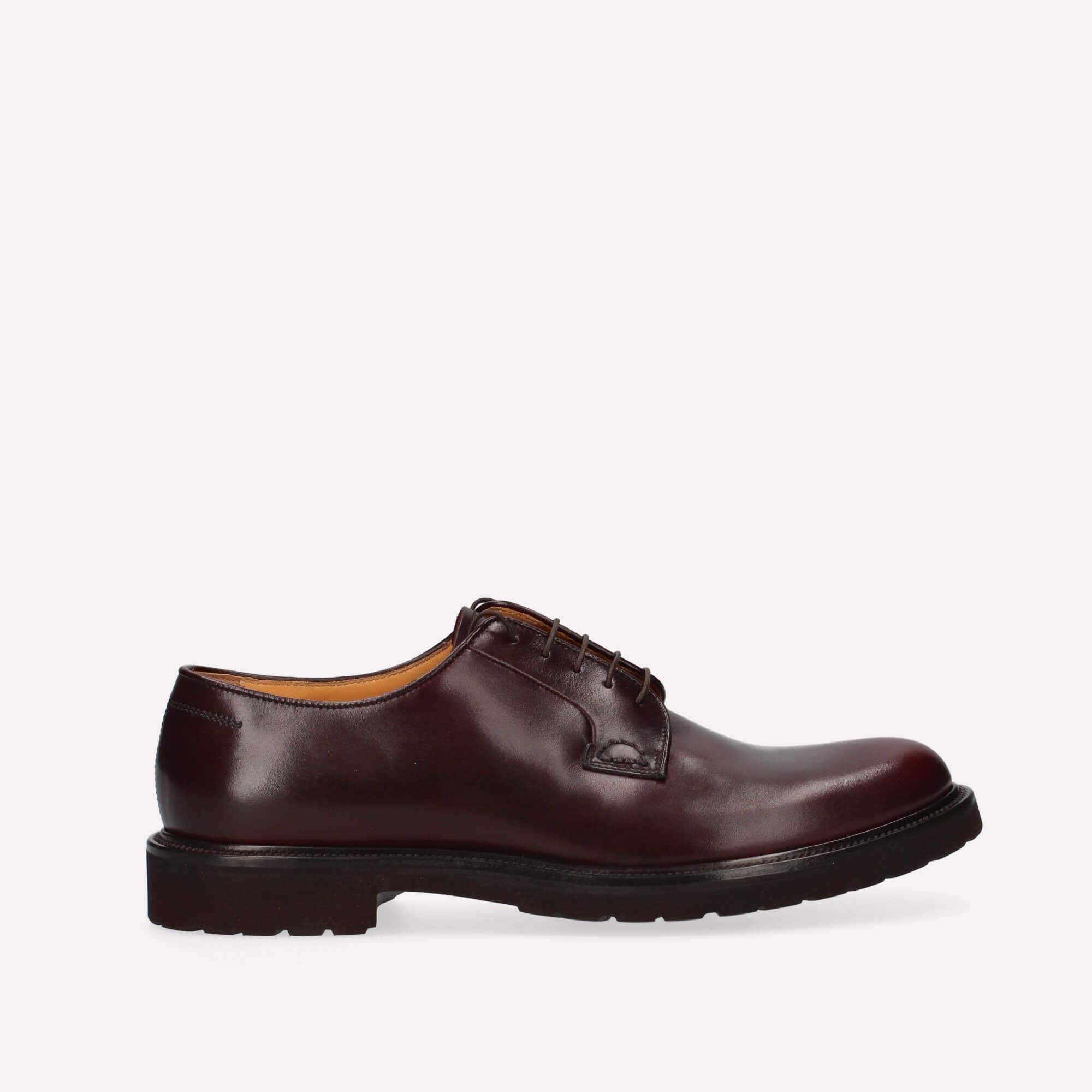
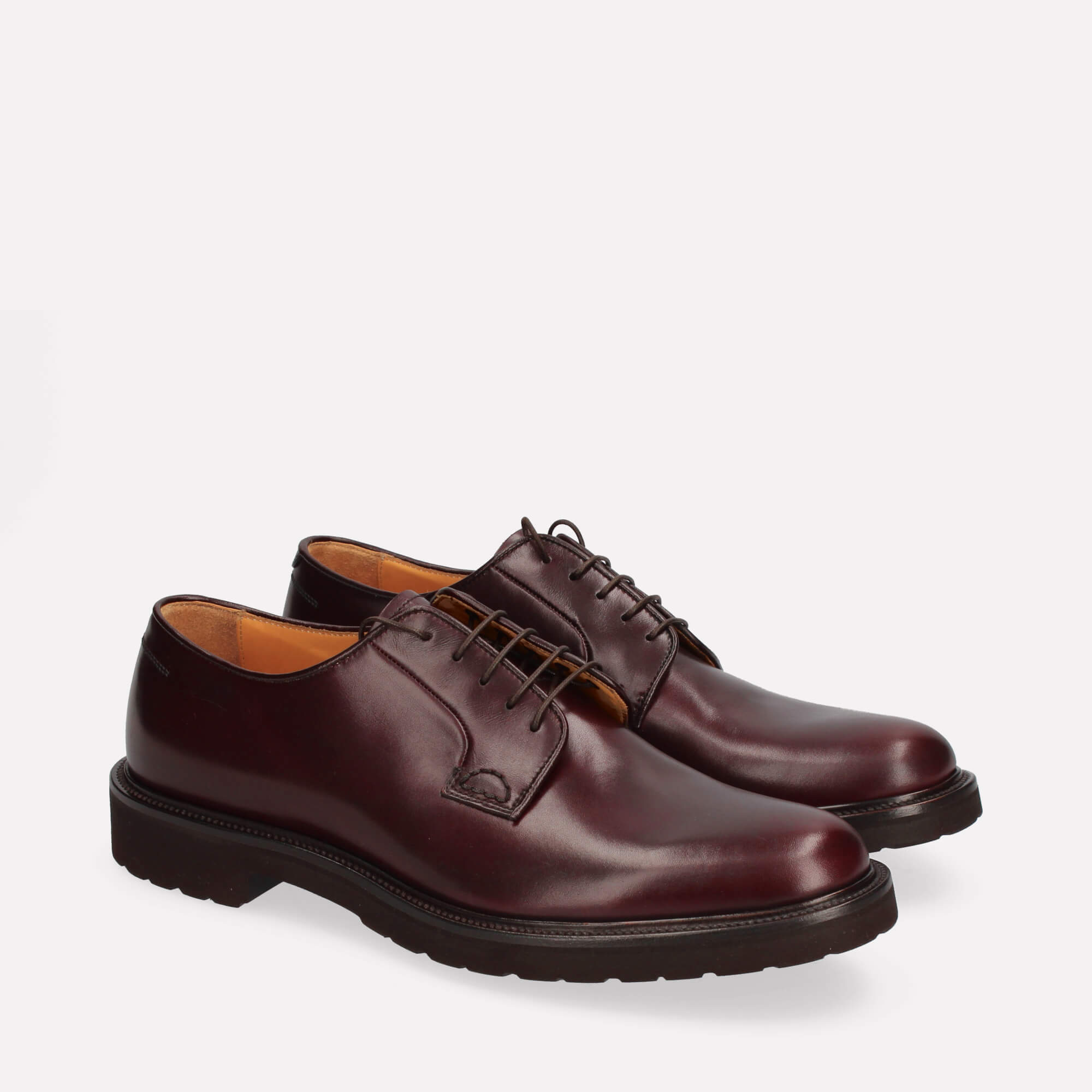
In the derby, the quarters are stitched over the vamp (open lacing). The side edges stay open when the shoe is unlaced, which makes the fit more flexible and comfortable. The derby is slightly less formal than the oxford, but it covers a much wider range of use: from the office to business-casual, all the way to looks with chinos and a knit.
In short: if you're looking for the most formal shoe possible, choose an oxford. If you want everyday versatility without giving up elegance, the derby is the right choice.
The sub-models: cap toe, brogue, plain toe
Both derbies and oxfords can feature different toe decorations that change their register.
Plain toe
No decoration. The vamp is a single, continuous surface. It's the most formal — suited to suits and ceremonies. Every detail is hidden: only the shape and the quality of the leather are visible.
Cap toe
A horizontal stitch separates the toe from the rest of the vamp. It adds a detail without raising the casual register. Very common in office derbies.
Brogue (with perforations)
The perforations (broguing) on the edge of the toe and/or along the vamp add character and lower the register towards business-casual. A full brogue (or "wingtip") — with the W-shaped decoration that wraps the whole toe — is the most characteristic but also the least formal.
How to pair men's derby shoes
Derby with a suit
A smooth black or dark brown leather derby is perfect with a suit. For ceremonies and formal occasions, the plain toe or cap toe is better. The brogue is acceptable with tweed, flannel or earthy-toned suits — less so with dark business suits.
Derby with trousers and a blazer
The pairing where the derby is at its best: wool or flannel trousers, a tweed or heavy cotton blazer, a shirt with or without a tie. In medium brown or cognac, the brogue derby is classic and very versatile.
Derby with chinos and a business-casual look
A smooth brown leather or suede derby works well with cotton chinos, a shirt, a fine knit. It's the right choice for office environments that require a minimum of polish without excessive formality.
What to avoid
Derbies and oxfords don't pair well with jeans (especially the plain toe and cap toe — brogues hold up better). For jeans, a loafer or a less formal laced shoe like the chukka is preferable.
Materials: smooth leather or suede
For derbies and oxfords the same general rules apply: smooth leather is more formal and more resistant, suede is softer in look and feel.
For a first office pair: a derby in smooth black or dark brown leather. For those looking for something with more character for business-casual use: a derby in tobacco, tan or grey suede.
Construction: why it matters
As with all types of shoe, build quality makes the difference between a pair that lasts a year and one that stays with you for twenty. The two main techniques are Blake construction — more flexible, lighter, with a slimmer profile — and the Goodyear welt, sturdier and easily resoleable but less snug to the foot. Both produce a resoleable shoe, if well made. Read more about Blake construction →
The Mille885 Boston derby
The Mille885 Boston model is a calfskin derby, built with the Blake technique in the Fermano district. Clean line, cap toe, leather sole. It's designed for those looking for an office derby that adapts to the shape of the foot over time — without the rigour of the oxford but with all the structure of a quality formal shoe.
Discover Mille885 derbies and oxfords →
Frequently asked questions about men's derby and oxford
What's the difference between derby and oxford?
The difference is constructional: in the oxford the quarters are stitched under the vamp (closed lacing), in the derby they're stitched over it (open lacing). The oxford is more formal, the derby more versatile.
Are derbies worn with jeans?
Generally no, especially smooth-leather models. Suede brogue derbies hold up better in a pairing with slim jeans, but it remains a combination to use with care.
Derby or loafer: which to choose?
It depends on the occasion. The derby is more structured and formal — better for the office, light ceremonies, looks with a suit or blazer. The loafer is more relaxed and comfortable — better for smart-casual, weekends, looks with linen or chinos.
How much does a good pair of derbies cost?
A quality handcrafted derby built in Italy starts at around €200–250. Below that threshold it's hard to find Blake or Goodyear construction and full-grain leather. The €250–400 range covers most medium-to-high Italian artisan production.
Read more
- Blake construction: what it is and why it makes better shoes — the technique that distinguishes a handcrafted derby from an industrial one.
- Men's Loafers: types, pairings and how to choose them — the slip-on alternative for those who want elegance without laces.
- Italian handcrafted shoes: how to recognise them and why they last longer — the signs that distinguish a real shoe from one that just looks the part.