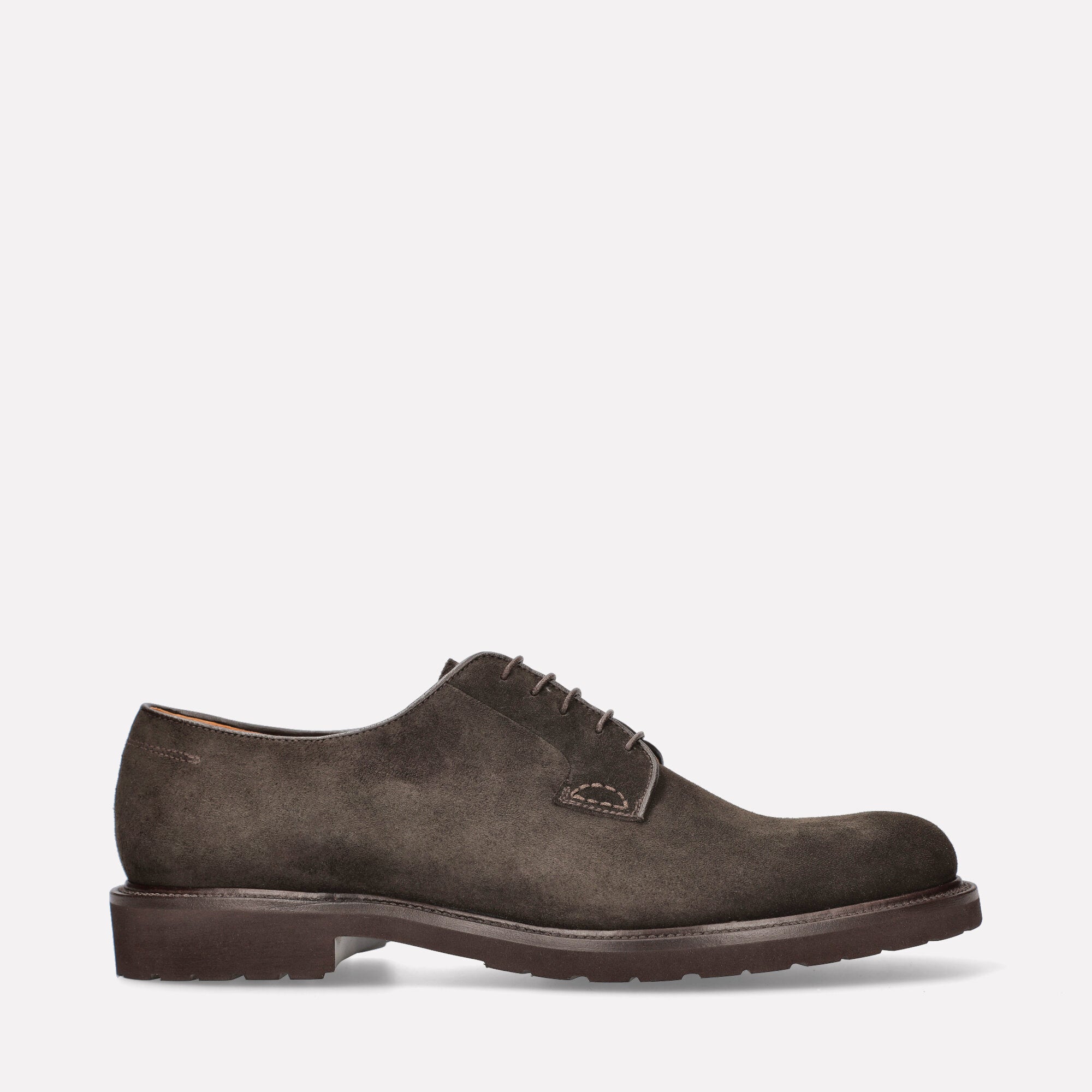

Men's Black Shoes: How to Wear Them and When to Choose Them

Black shoes are the safest choice in a man's wardrobe: formal by definition, easy to pair, suited to any serious context. But "safe" doesn't mean "without rules" — getting a black-shoe pairing wrong is easier than it looks. This guide covers how to wear them with colours and contexts, and when brown is the better call instead.
Why black is the most formal choice
Black is an absolute colour: it has no temperature, no undertones that bring it closer to other colours. That's what makes it the highest possible register — the choice for ceremonies, funerals, strict business contexts. It's also, paradoxically, the easiest colour to pair and the hardest to make interesting: with black, the outfit lives in the details, not the contrasts.
Black shoes with a navy or grey suit
This is the most classic and the safest pairing there is.
- Navy suit + black shoes: always works, in any formal context. It's the default combination when you're not sure what to choose
- Grey suit + black shoes: the darker the grey (charcoal), the softer and more elegant the contrast. With light grey the contrast becomes sharper — still correct, but less subtle
If you're weighing a warmer alternative for the same context, the guide to brown shoes: how to wear them explains when dark brown can replace black without losing formality.
Black shoes with a brown suit: the exception
Here the rule flips. Brown is a warm colour, black is absolute and cold: together they don't work — the eye picks up something off even without knowing why. With a brown suit, brown shoes are the correct choice — never black.
Black shoes with jeans and casual outfits
Black works outside formal contexts too, but it needs more care. An overly polished black shoe with a casual pair of jeans creates a register mismatch — it looks "dressed" for the wrong context. The fix is choosing less structured models: a black loafer in matte leather or suede behaves better than a glossy oxford.
Black is more coherent with dark denim than with light denim: both are deep tones, so the contrast stays contained.
Black shoes: derby, oxford or loafer
The model changes the outfit's register as much as the colour does.
- Black oxford: maximum formality. Closed lacing, clean profile — the choice for ceremonies and strict business contexts. The Lille in black leather is built for this register
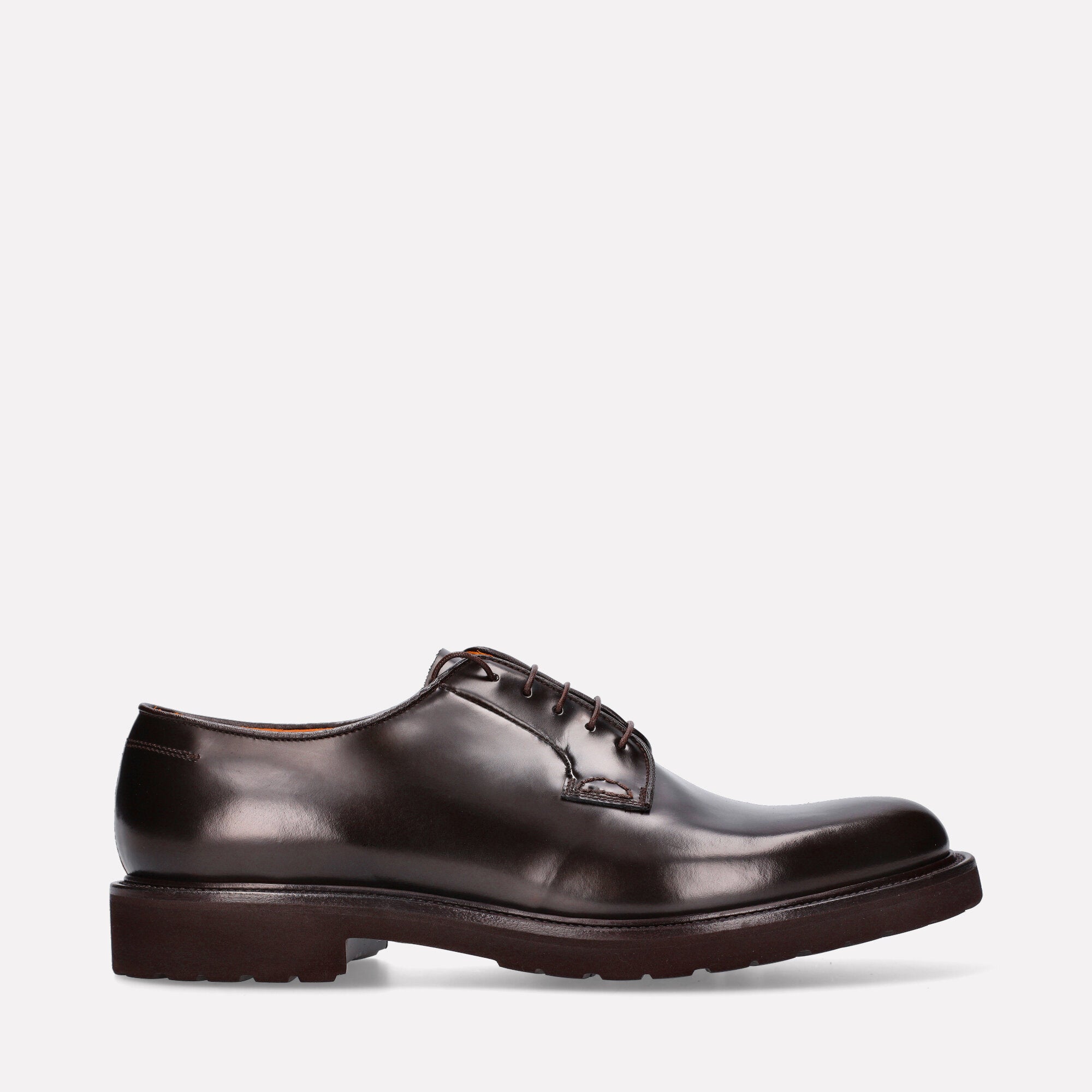
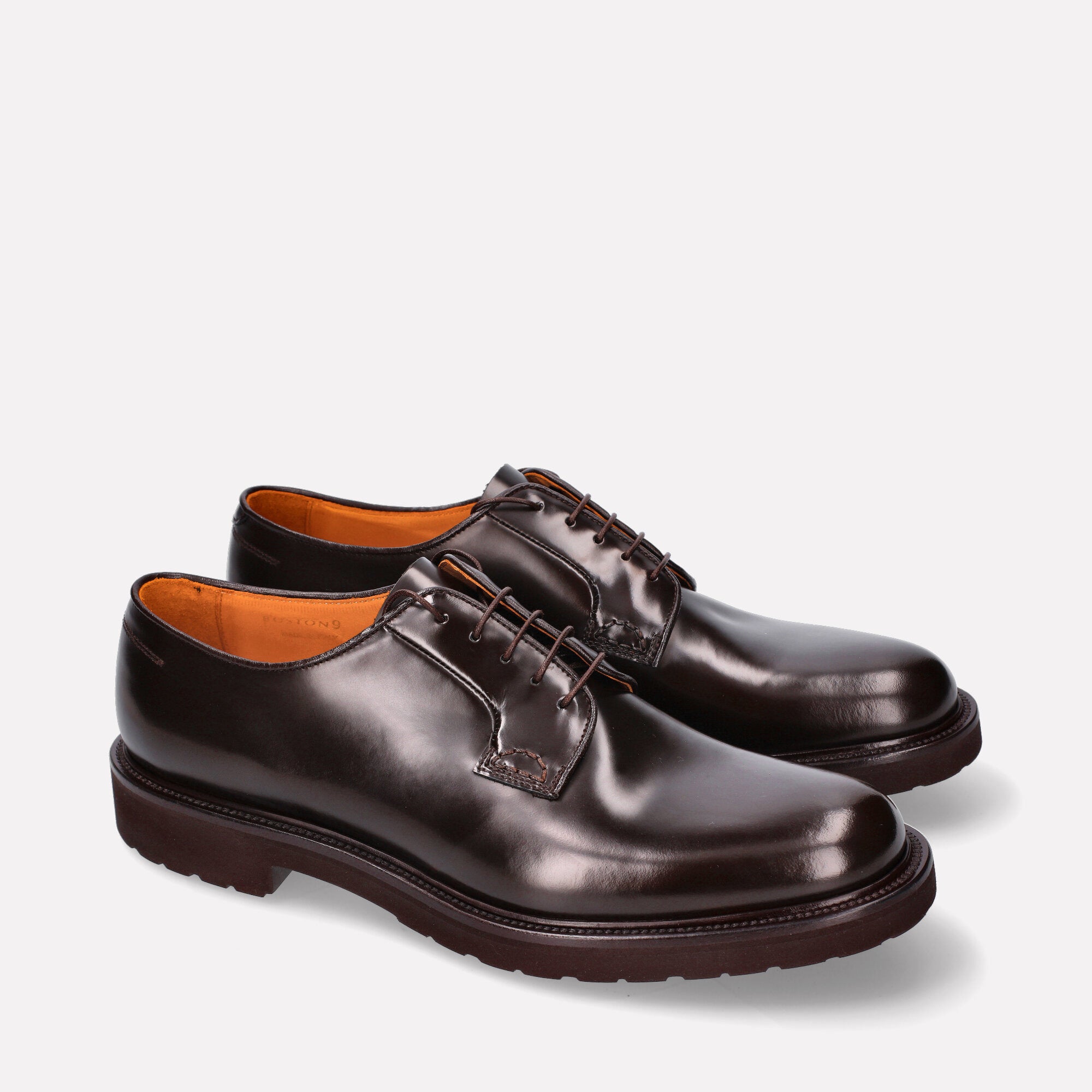
- Black derby: slightly more versatile, open lacing, works in structured smart-casual settings too. The Boston in black leather covers both the office and more polished occasions
- Black loafer: the most casual of the three. Useful when you want a less demanding black, for smart-casual contexts where an oxford or derby would be too much
The differences between the two main laced models are covered in depth in the guide to Derby and Oxford: differences and pairings.
The belt rule with black
With black shoes the belt rule is stricter than with any other colour: black belt, no exceptions. It's the one colour where even a small shade mismatch is spotted instantly, because black has no undertones to hide it. The black calfskin belt is the safest choice to pair with any black smooth-leather shoe.
When black is the only option
Some contexts don't offer black as one option among many — it's the only correct one:
- Evening ceremonies and black tie: black shoes only, in smooth leather, never suede
- Funerals: black is mandatory, no room for interpretation
- Strict corporate dress codes: many corporate settings explicitly require black
For weddings the choice is more open — it depends on the suit and your role. The guide to wedding shoes covers every case, black included.
Two common mistakes with black shoes
- Black with a brown suit. The most frequent and most visible mistake — the warm-cold contrast never works
- Too glossy for casual wear. A mirror-polished black shoe with a casual outfit sends the wrong register — for casual wear, matte leather or suede works better
Maintenance: black shows everything
Scuffs, dust and marks stand out on black more than on any other colour, precisely because there are no undertones to hide them. Regular polishing with a neutral cream and a soft cloth matters even more than it does on brown shades. The full routine is in the guide to cleaning and caring for leather shoes.
Frequently asked questions
Do black shoes go with a brown suit?
No. Black is an absolute, cold colour, brown is warm: the pairing creates a visual clash that's noticeable immediately. With a brown suit, you need brown shoes.
Black or brown shoes for your first pair?
For versatility, brown (tan or mid-brown) is the better choice: it pairs with more colours. Black remains essential for the most formal contexts, but it's less flexible day to day.
Can black shoes be worn with jeans?
Yes, ideally in less glossy models — a loafer or derby in matte leather or suede — and with dark denim rather than light, to keep the register coherent.
What belt goes with black shoes?
Always a black belt. It's the one colour where even a small shade difference is noticeable, because black has no undertones to mask it.
Mille885 black shoes are made in Montegranaro, in the Fermano district, with Blake stitching and Italian leather. Browse the full selection in laced shoes and loafers.